

Welcome to Global Breakouts, Deadline’s strand in which we shine a spotlight on the TV shows and films killing it in their local territories. The industry is as globalized as it’s ever been, but breakout hits are appearing in pockets of the world all the time and it can be hard to keep track. So we’re going to do the hard work for you.
We head to France this week to explore rural feel-good drama Holy Cow, which was an unexpected local box office hit and could now be poised to travel the world.
Name: Holy Cow (Vingt Dieux)
Country: France
Producer: Muriel Meynard at Agat Films – Ex Nihilio
International sales: Pyramide International
For fans of: Bloody Milk, Divines, The Marching Band
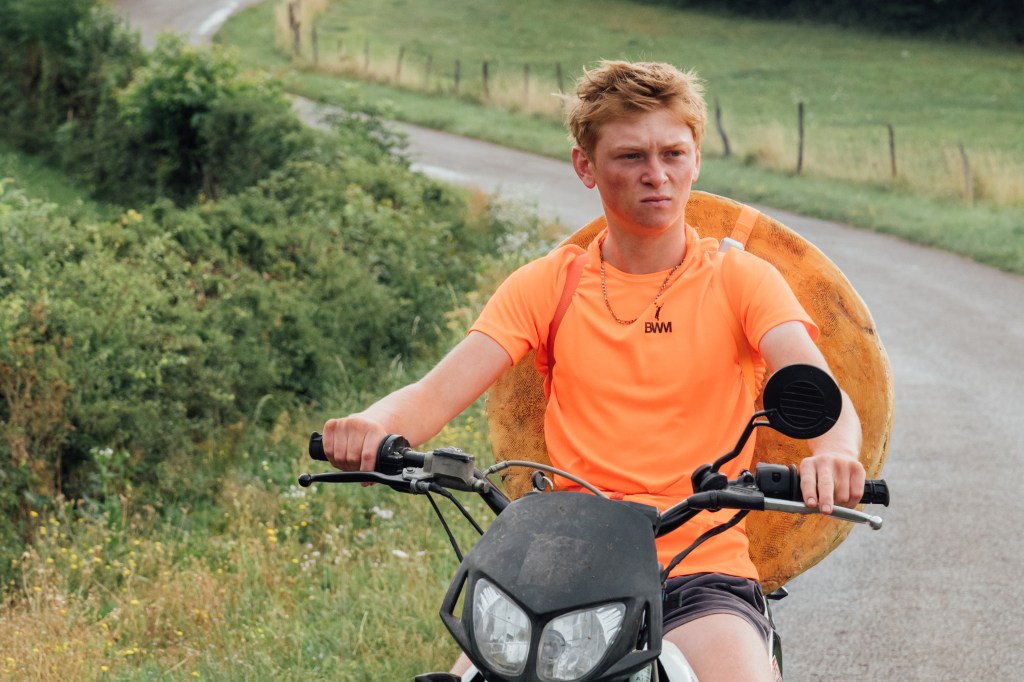
French director Louise Courvoisier’s feature directorial debut Holy Cow (Vingt Dieux) follows a teenager raised in a farming community in the Eastern department of Jura who embarks on a mission to make a prize-winning wheel of Comté cheese in the face of a series of hard knocks.
The movie may not seem like a crowd-pleaser on paper, nor a box office breakout, yet the film has drawn close to 1 million spectators at home since its release on December 11, 2024, for a rough gross of $6.5M on the back of a $2.1M (€2M) budget. It recently won best first film at the French César awards.
Holy Cow is now traveling the world after selling to some 30 territories after its buzzy premiere in the Cannes Un Certain Regard last May caught the attention of buyers up and down the Croisette.
The title is currently poised for theatrical releases in the U.S. by Zeitgeist Films on March 28 and the UK by Conic Films on April 11, having hit cinemas in Benelux (Paradiso), Germany (Pandora) and Switzerland (Filmcoopie) at the beginning of the year. Outside of Europe, the film has sold to China (Hugoeast/Century Carnival), Hong Kong (First Distributors) and Japan (King records) and the Middle East (Moving Turtle) among other territories.
Holy Cow was shot on location in the wooded, low mountain Jura region, where Courvoisier was raised by her Swiss father and German Canadian mother, classical musicians who decided to quit their careers specialized in Baroque music to set up a farm and be closer to nature.
The feature is a family affair with parents credited as composers; her sister as its production designer and brother, as chief set builder. The amateur local cast is led by Clément Faveau in the role of 18-year-old protagonist Totone, whose carefree summer spent drinking at open-air discoes, chasing girls and getting into the occasional fight comes to an abrupt halt when his cheesemaker father suddenly dies.
Finding himself the sole carer for his younger, but mercifully sweet, sister and desperate to make a living, Totone embarks on a mission to master the art of making Comté cheese in the hope of winning a big ticket prize in a local contest. Unsurprisingly, he has a lot to learn.
“We were confident about the film going into Cannes – for its mix of feel-good and ‘terroir’ [agricultural] setting– but it exceeded our expectations, taking off from the first market screening,” recounts Agathe Maurac, head of sales at Pyramide International.
“Electric atmosphere”

Louise Courvoisier (fifth from right) and Muriel Meynard (far right) with cast on red carpet in Cannes.
Getty Images
The “electric atmosphere” of the premiere in the Cannes Film Festival’s Salle Lumière, at which the young cast broke into a rendition of the traditional song ‘La Danse du Limousin’ featured in the film, further stirred interest, adds Maurac.
Holy Cow is produced by Muriel Meynard at Agat Films – Ex Nihilio, who is also riding high after receiving Producer of the Year from France’s prestigious César awards back in February.
She first crossed paths with Courvoisier when the latter was a student at the Cinéfabrique film school in Lyon. “It’s bit different from Fémis,” Meynard explains, referring to France’s top film school in Paris. “It’s a new school where the students have different paths. You don’t need to have passed your high school exams, for example, to get in, and I like to support it however I can.”
The pair re-met when Courvoisier started looking for a producer for her first feature after short film Mano a Mano, which won the Cinefondation Award at Cannes in 2019.
“We immediately connected. I said to myself, ‘I am going to work with her.’ I think she said the same thing to herself too,” recounts Meynard.
They began their collaboration with the medium-length documentary Roule ma poule about a traveling circus troupe, with Courvoisier then focusing on writing the screenplay for Holy Cow.
“I had so much confidence in her. She knows her region so well and the people she wants to talk about. I said to Louise that whether it was with €200,000 or €2M, we’d get the film made.”
At that point, Meynard was not too fixated on the box office. “100,000 to 150,000 admissions would have been fantastic. It’s a film by a young cineaste who I want to accompany,” she says.
After the success in Cannes and a flurry of sales, Meynard upped her French box office forecast to 300,000 admissions, but was bowled over by its eventual success.
“Nobody expected it to hit close to a million spectators,” says the producer.
She thinks the film’s authenticity, its portrayal of rural youth and window into a world rarely seen on the big screen have helped draw audiences.
“We’re with real people. It’s a film which is hyper sincere and very contemporary, showing these youths as they are today,” she says.
North American rights were acquired after Cannes by Kino Lorber under its longstanding alliance with Zeitgeist Films. Under the partnerships sees Zeitgeist handle the theatrical release while Kino Lorber looks after ancillary distribution.
“We weren’t in Cannes but somebody who saw it there mentioned it to me, and we decided to get a link,” says Emily Russo, Co-President and Co-founder of Zeitgeist Films alongside Nancy Gershman.
The company has a long history with Paris-based film company Pyramide and friendship with CEO Eric Largesse, dating back to the creation of Zeitgeist Films.
“We’ve probably acquired half a dozen films from the company – including Irma Vep and Andrey Zvyagintsev’s Elena,” says Russo.
Holy Cow
Agat Films – Ex Nihilio
She and Gershman instantly fell in love with Holy Cow.
“We were just completely charmed by it. We didn’t even really know completely all the backstory about it that kind of came later. It was this lovely coming of age story in this area of France that I really wasn’t that familiar with,” says Russo.
“It’s almost like cinéma-vérité for the way that you see the life there, and the way the people live. From that very first scene of the fayre, it took me right from there. I was like, where is this place and who are these people?,” she continues.
“We only do five or six films a year. So, we’re really picky and very selective, so we have to really love a film and really believe in it, to take it on. And we felt with this film, there were hooks and things that we’d be able to sell.”
As well as appealing to lovers of France and French cinema, Russo thinks the movie might also draw in foodies for its depictions of the Comté cheese-making process.
“People love films about food, and this is about cheese and I also happen to love Comté cheese,” she says.
The discovery that New York’s Film Forum cinema theater wanted to show the film also helped move the acquisition along.
“It’s a great partner for opening international films. If you know you have a theater in New York where you can open a film it helps a lot.”
Zeitgeist opted for a post-Academy Awards theatrical opening to ensure promotion around the film was not drowned out by best international feature film campaigns.
It did, however, screen on the U.S. film festival circuit at events such at the Mill Valley and Orcas Island, where it won the $10,000 Jean-Marc Vallée Vanguard Award, and the French American Film Festival in Los Angeles.
The film also played at 30th edition of Rendez-Vous with French Cinema in early May, ahead of the March 28 theatrical launch in New York, followed by an opening on April 4 in L.A.
“Our intention is for the film to perform at a level that will enable us to get a lot of other theaters,” says Russo. “We’re predicting we’ll get to about 60 or 70 screens.”
Kino Lorber is lining up a digital release for June 4, while there will also be a DVD release, with plans afoot to include Courvoisier’s short films as extras.
Courvoisier and Meynard made the trip to New York for the Rendez-Vous screening
“It was great. The theater was full and the Q&A was great, and we also went to show it at Princeton,” says Meynard. “New York wrapped the adventure. We’ve been traveling with the film since September, then there were the Cèsar Awards. It was great to finish with a fireworks display there.”
Back in France, Courvoisier has yet to set her next feature project.
“The second feature can often be very difficult but even if Louise’s next film only draws 20,000 spectators, it doesn’t matter,” says Meynard, who is in for the long-haul with the rising director.
“I think she will stay in Jura but it won’t be a repeat of Holy Cow, that’s for sure. I don’t think it would be be possible to reproduce the film again.”
