

The White House on Thursday released a list of what they consider “out of control” content at the Smithsonian, after Donald Trump attacked the institution earlier this week as too “woke.”
On Truth Social, Trump complained that “everything discussed is how horrible our Country is, how bad Slavery was, and how unaccomplished the downtrodden have been — Nothing about Success, nothing about Brightness, nothing about the Future.” He has initiated a review of content at the sprawling complex of museums and galleries.
The White House followed up with specifics. “As it increasingly prioritizes exhibits that undermine our values and rewrite the American story through a lens of grievance and exclusion, the Smithsonian’s embrace of woke ideology distorts history and erodes public trust,” the White House said.
Among the examples:
A National Museum of African American History and Culture series on white culture in the United States, which the White House said was designed to educate people on “a society that privileges white people and whiteness.” They cited an infographic that was produced in 2020, as part of a Talking About Race portal. The infographic included in list of “aspects and assumptions of white culture” such things as “rugged individualism,” “status power & authority” and “protestant work ethic.” But amid criticism of the infographic that year, it was removed, and the museum issued an apology. The White House also linked to the series, but it turns up an error page.
Other examples include an “Intersex-Inclusive Progress Pride flag” flown at the National Museum of American History, and the museum’s LGBTQ+ History exhibit that seeks to better “understand evolving and overlapping identities such as lesbian, gay, bi-sexual, transgender, queer, transsexual, transvestite, mahu, homosexual, fluid, invert, urning, third sex, two sex, gender-bender, sapphist, hijra, friend of Dorothy, drag queen/king, and many other experiences. The White House also cited as objectionable museum website articles on topics like LGBTQ+ inclusion and skateboarding.
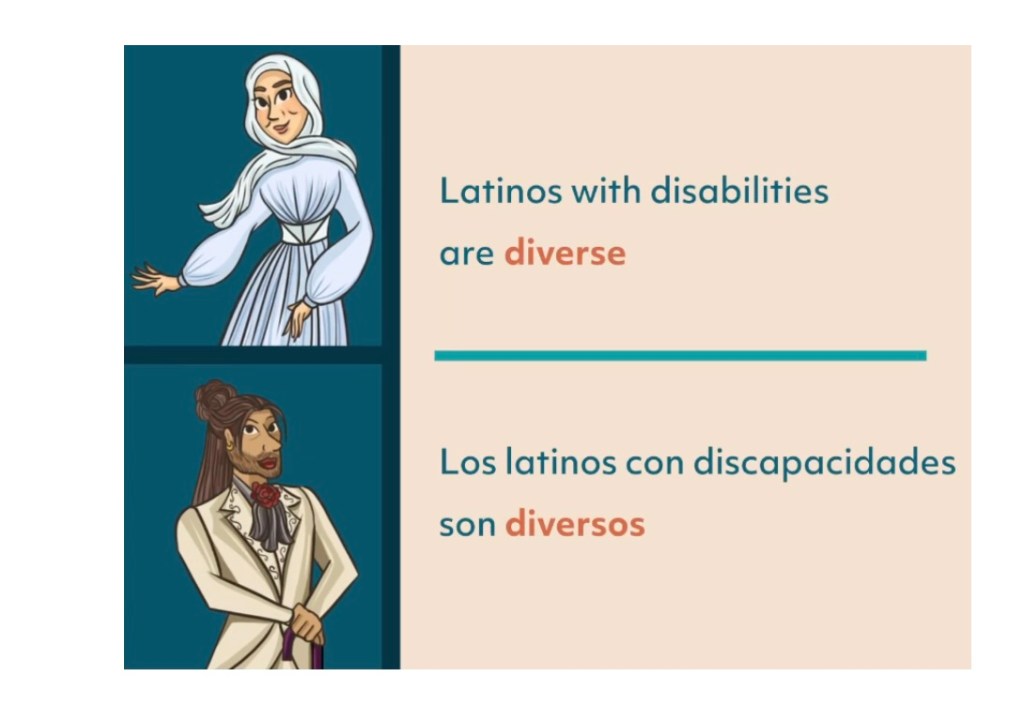
Also listed was programming for the National Museum of the American Latino, which has a temporary gallery at the American History Museum as well as an online presence. The White House cited as objectionable programming about “‘animated Latinos and Latinas with disabilities — with content from ‘a disabled, plus-sized actress’ and an ‘ambulatory wheelchair user’ who ‘educates on their identity being Latinx, LGBTQ+, and disabled.’”
Also included in the list was a National Portrait Gallery exhibit that featured Rigoberto A. González’s painting, Refugees Crossing the Border Wall into South Texas, and a stop-motion animation portrait of the career of Anthony Fauci.
The White House also cited instances of how aspects of American history are described, including one on Benjamin Franklin that focuses “almost solely on slavery, directing visitors to learn more about his ‘electrical experiments and the enslaved people of his household,’ noting his ‘scientific accomplishments were enabled by the social and economic system he worked within.’”
Another example cited was an American History Museum display that features a drawing of migrants watching Independence Day fireworks through the U.S.-Mexico border wall. The display is labeled “Fear and Prejudice,” with the text, “Many U.S. politicians, as early as Benjamin Franklin, have feared non-White immigration. Instead of being recognized as community builders, Latin American immigrants are sometimes described as “invaders.” Many have risked their lives to immigrate because they believe in U.S. ideals such as democracy, equality and opportunity.”
Some of the examples were linked to an Aug. 15 piece in The Federalist, the publication of the rightward advocacy group, which argued that the Smithsonian was “wall-to-wall anti-American propaganda.” But the Museum of American History features numerous exhibits on U.S. success and might, with the focal point of its entrance being a display of one of its prized artifacts, the Star Spangled Banner.
The Smithsonian is run by a Board of Regents, none of whom are appointed by the president. When Trump sought to fire Kim Sajet, the director of the Portrait Gallery, the Smithsonian asserted its independence, although she later resigned.
The institution also signaled potential changes. In a statement, the Smithsonian said that its board had “directed the secretary to articulate specific expectations to museum directors and staff regarding content in Smithsonian museums, give directors reasonable time to make any needed changes to ensure unbiased content, and to report back to the Board on progress and any needed personnel changes based on success or lack thereof in making the needed changes.”
