

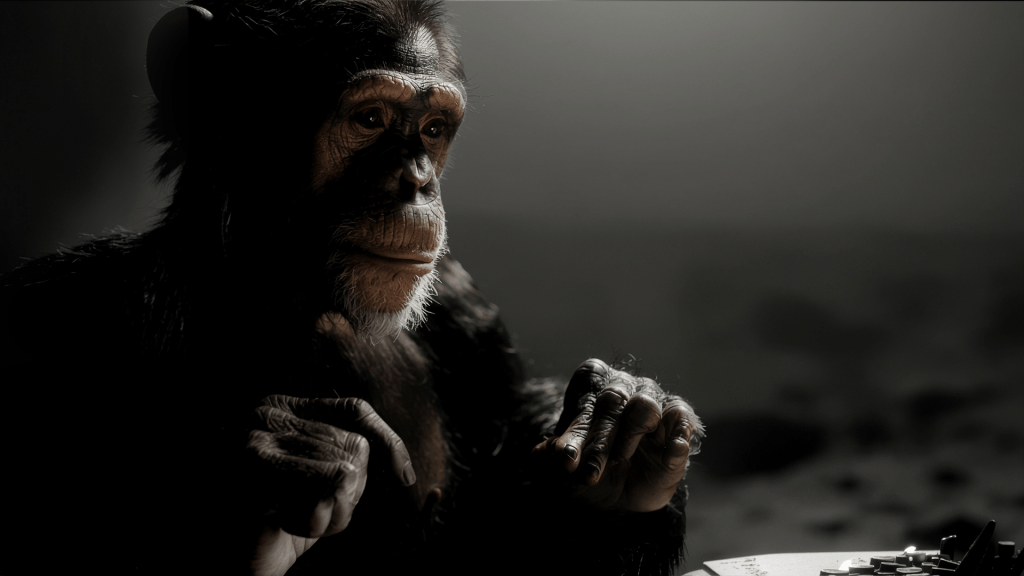
AI firm Moonvalley has released its Marey video model to the general public after an initial test run with filmmakers, agencies and other trial users.
The system is notable for being what the company calls “commercially safe,” meaning that it has been built from fully licensed images and IP. Many AI firms have opted to “scrape” the internet to train their models, a practice that has resulted in litigation. Disney and NBCUniversal last month sued Midjourney for using their property without permission.
Marey enables complex VFX sequences and other aspects of filmmakers’ vision. Effects pioneer Ed Ulbrich, whose credits include Titanic, The Curious Case of Benjamin Button and Robert Zemeckis’ Here, recently joined Moonvalley in a senior exec role, citing the “clean” Marey tool as a key motivation. Moonvalley also owns Bryn Mooser‘s Asteria Film Co., acquiring the AI studio after it forged ties with a company co-led by actress and producer Natasha Lyonne.
Asteria’s stable of filmmakers spent six months contributing to the research behind Marey, with three months of alpha testing involving outside partners.
Users can now access Marey online with a subscription. The system is also being made available as an enterprise product using partners’ IP. Moonvalley has initiated an invitation-only beta for its accompanying production platform Voyager,
“We built Marey because the industry told us existing AI video tools don’t work for serious production,” Moonvalley CEO and co-founder Naeem Talukdar said. “Directors need precise control over every creative decision, plus legal confidence for commercial use. Today we’re delivering both, and proving that the most powerful AI comes from partnership with creators, not exploitation of their work.”
Marey is the first production-grade AI model built to meet the standards of world-class cinematography, according to Moonvalley. Trained on native 1080p video and never on user-generated content, the system delivers footage up to 10 seconds at 24 FPS with consistent quality throughout, supporting aspect ratios from widescreen to vertical. Directors can use features like Motion Direction for precise object movement, Camera Control for cinematic storytelling, Motion Transfer to adapt performance across scenes, Pose Control for nuanced performances, and Inpainting to modify specific elements without regenerating.
“Traditional AI video often reduces filmmakers to consumers typing prompts into black box systems with little creative control over generations,” said Mateusz Malinowski, Moonvalley Chief Scientific Officer and former DeepMind researcher. “With Marey we aim to give directors the same level of control they expect on set. By working directly with filmmakers, we built technology that amplifies and empowers their creative vision rather than replacing it.
